1



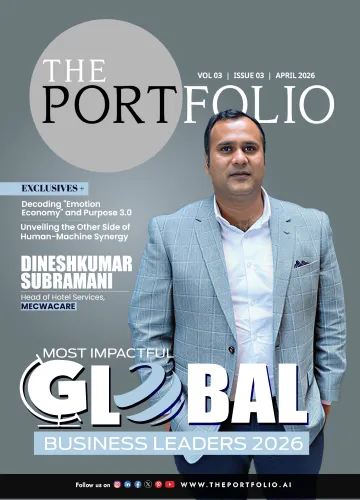
Head of Hotel Services
MECWACARE

The force behind aged care dining transformation, Dinesh blends culinary expertise with digital innovation, elevating hospitality into a personalised, human-centred care experience across large-scale healthcare environments.
In aged care, a meal is rarely just a meal. It becomes routine, memory, comfort, and in many cases, the one part of the day that still feels personal. Delivering that experience consistently across multiple facilities is not a function of operations alone; it requires intent, systems, and a very deliberate understanding of what care actually means in practice.
Dineshkumar Subramani has spent over two decades working within that space, not by following a conventional path, but by gradually expanding the role of hospitality itself. Early years in commercial kitchens built discipline and pace, while his time across large-scale healthcare operations introduced the complexity of compliance, scale, and resident needs. Those experiences now converge in his role at mecwacare, where he serves as Head of Hotel Services across 20+ facilities, driving system-wide improvements in dining standards, workforce capability, and digital integration.
In an exclusive interaction with The Portfolio Magazine, he reflects on the journey, the systems behind it, and the responsibility that comes with it.
Food never felt like a career decision because it was always present, almost as a language of its own. Growing up, the kitchen was where everything came together: conversations, culture and emotion. That stayed with me long before I entered the industry professionally.
What initially drew me in was the craft itself, the discipline, the pace, and the pressure of commercial kitchens in Melbourne. Those early years shaped my standards. You learn quickly that consistency matters just as much as creativity, especially in high-volume environments.
The shift came later, when I moved into healthcare hospitality. That is where the meaning of food changed completely. A meal was no longer just about quality or presentation; it became an experience tied to dignity, comfort, and care. At some point, the question stopped being what we were cooking and became who we were cooking for. That shift stays with you. It changes how you design menus, how you train teams, and how you define impact.
Early exposure to Melbourne’s restaurant industry built discipline, but moving into healthcare hospitality reshaped how I think about scale and responsibility. Working with Compass Group introduced the complexity of operating at scale, logistics, compliance, and the reality that food service in institutional settings requires a very different mindset.
At mecwacare, that responsibility expanded. Leading across multiple facilities meant thinking beyond a single kitchen and toward systems that could deliver consistency across environments. Implementing platforms like FoodByUs and Safe Food Pro changed not just processes but how teams engaged with procurement and compliance, giving them visibility and control they didn’t have before.
Recognition like the Restaurant and Catering Association National Gold Award mattered, but more for what it represented than the title itself. It reinforced the belief that aged care dining should meet the same standards as any top-tier hospitality environment. That belief continues to shape every decision I make.
Aged care hospitality does not allow you to separate operational excellence from human understanding. Both have to exist together, and the balance is not always straightforward. The people we serve have complex needs, and the teams delivering that service carry their own pressures.
Building the right team starts with values. Skill can be developed, but the instinct to care, to notice, to go beyond what is required, that is harder to teach. I have always believed it is better to grow someone with the right mindset than manage someone who only brings technical ability.
Training becomes the bridge between intention and execution. When people understand why something matters, not just what needs to be done, the quality of their work changes. Retention then becomes less about incentives and more about connection. People stay where they feel seen, where they grow, and where their work has meaning beyond the task itself.
Technology in this space is no longer optional, but it has to be applied with intent. The pressures on aged care, workforce shortages, compliance demands, and financial constraints require systems that support both efficiency and accountability.
At mecwacare, digital transformation started with solving practical problems. FoodByUs simplified procurement, bringing transparency and control into one platform. Safe Food Pro replaced paper-based systems with real-time compliance, immediately improving accuracy and reducing the administrative burden.
Beyond that, we have developed AI-driven tools like WasteWise to monitor food waste and identify patterns that would otherwise go unnoticed, as well as systems that track pricing changes and automate invoicing. The purpose has never been innovation for its own sake. Each tool is designed to give the team time back. Because ultimately, technology should not replace the human element in aged care, it should create more space for it.
The future, as I see it, is far more integrated than what we have today. Personalised nutrition will become more central, with meals designed not at the facility level but tailored to individual needs, preferences, and health conditions.
Systems will also need to connect more intelligently. Procurement, compliance, waste management, and resident feedback cannot operate in isolation if we want to meaningfully improve outcomes. Integration across these areas will define the next phase of operational maturity. At the same time, the industry has to invest in its people. Technology will only be as effective as the teams using it, making training and capability-building critical.
More broadly, I want to see aged care hospitality recognised for what it truly is, not a simplified version of commercial hospitality, but a discipline that demands both technical excellence and deep human understanding.
“The moment you stop asking what you’re cooking and start asking who you’re cooking for, everything about the work changes.”



Thank You For Subscribing
There was an error while trying to send your request. Please try again.