1



CEO
Pro Practice Solutions

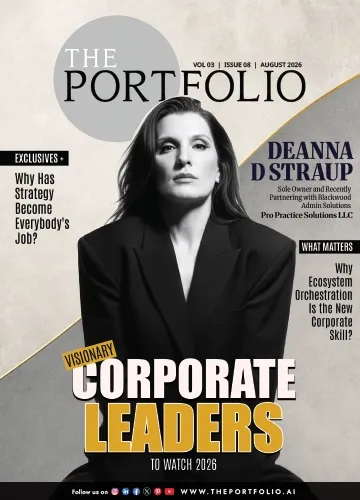
Driving operational excellence as Sole Owner of pro practice solutions, Deanna D Straup brings a dynamic, strategic vision to the medical practices sector in the United States. Pairing profound administrative insight with innovative practice management concepts, she shapes environments that redefine client engagement, anchoring future-proof growth and professional success across the enterprise.
Healthcare has become remarkably sophisticated at treating patients, yet some of its most expensive problems still begin with something far less dramatic, a missing line in a note, a missed eligibility check or a claim submitted before anyone asks whether it can actually be paid. Deanna D. Straup has spent more than two decades learning to spot those gaps, first as a medical biller and office manager, then through coding, compliance, credentialing and revenue-cycle consulting, and now as the founder of Pro Practice Solutions. Her instinct has always been to look one step earlier in the process, asking why a denial happened rather than simply correcting it after the fact. That thinking now extends into AI, where she is developing tools designed to identify medical-necessity issues before claims are submitted. In this conversation with Portfolio Magazine, Deanna reflects on the experiences that shaped her approach and the bigger healthcare problem she is determined to solve.
When I think about where I started, it still surprises me how much of what I know today was simply learned along the way. I was a receptionist in a chiropractor’s office when the doctor asked me to handle his billing, and I had never done it before. He told me, “I’ll teach you; it’s easy,” and I took it from there. I taught myself computers, took a typing class in high school, and later used the internet to keep learning because I didn’t have the money or time to go to school while raising four kids and working.
Every time I entered a new speciality, there was another learning curve, but once I understood it, I wanted to go deeper. I would look at a claim and wonder, why aren’t we going for this, or did you know we could do that? I have always been a problem solver, and when I see something that can be done better, I have a hard time not speaking up.
I think I’ve evolved quite a bit because I’ve learned that being a leader isn’t about throwing commands around and telling people what to do. Earlier in my career, I was always the person who wanted to speak up and say, “I have an idea,” but as I’ve grown, I’ve realised that leading people requires understanding them first.
When somebody isn’t doing something right, I don’t believe in simply reprimanding them. I would rather teach them the right way, with compassion and ease, while still being stern enough that they understand what is expected. There is a very fine line because you can’t become their friend when you’re their leader, but you also can’t forget that you’re working with human beings. One of the things I love most about leadership is watching people blossom. These externs came in not knowing anything, and now they’re working on their own and asking the right questions. Seeing that tells me I’ve taught them something they can carry forward.
The idea for Comply IQ really came from seeing the same problem over and over again. I was constantly working with doctors on compliance because their notes were often the reason claims were being denied for medical necessity. The doctors are focused on the patient, as they should be, and they don’t necessarily think about every requirement a payer needs to see in their notes. I kept thinking, why are we waiting until the claim comes back denied to find out something was missing?
I wanted to catch the problem before it became a denial. The system I’m building takes the provider’s notes and compares them with the payer’s requirements for medical necessity, then tells the provider what may be missing before the note is signed and locked. Once it reaches billing, Comply IQ can analyse the claim using the CPT codes, ICD-10 codes and modifiers and indicate whether it is likely to be a clean, reimbursable claim. The biggest difference is that I’m trying to fight the denial before the claim is submitted.
“If it’s something I want, I can find the answers. I’ll reach out to every resource I can figure out.”
When I think about the future, I see Comply IQ being integrated into EHRs and thousands of practices using it because I know how much of a difference it could make. I also know there are going to be roadblocks. Getting integrated with different EHR systems could take years, and right now I’m completely bootstrapped, so time is probably my biggest challenge.
I’m still working with my three clients while building the company, and sometimes that means working 15 hours a day, seven days a week. I know I need to give myself a break, but when a new client calls because their billing system is a mess, I can’t just ignore it. I want to see the workflow myself, understand where the problem is and figure out how to fix it. I’m also training AAPC externs because I believe in giving people real-world experience, and I may end up hiring some of them. Eventually, I want the business to give me the freedom to travel and step back a little, but I don’t think I’ll ever completely keep my toes out of it. I’m building this for my kids, and I want to leave them something meaningful.
Giving back is very personal to me because I’ve experienced what it feels like when someone gives you the support you need at a difficult point in your life. The YWCA Domestic Violence Program helped me stand on my feet, recognise my worth and move forward, and without a program like that, I don’t think I could have pushed myself the way I did. I went back to college at 49 and graduated at 54 with a bachelor’s degree in accounting with an emphasis in healthcare management.
I also see my work itself as a way of giving back. Doctors work hard for their money, and I’m tired of seeing them work for free because their claims aren’t getting paid. When insurance doesn’t cover something it should, the burden can eventually reach the patient. If I can help reduce some of that unnecessary debt by helping doctors get their claims paid correctly, then I feel I’m contributing to a better healthcare system. I want to support the YWCA and other organisations that help people find their way forward because someone once did that for me.






Thank You For Subscribing
There was an error while trying to send your request. Please try again.