1


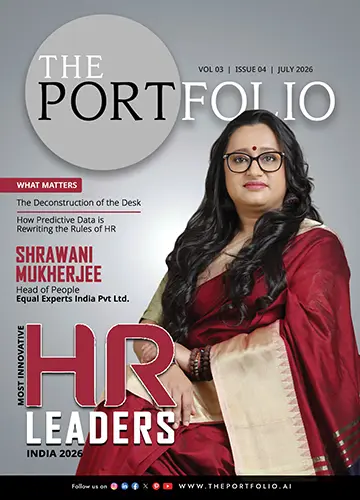
Head of People
Equal Experts India Pvt Ltd

As Head of People at Equal Experts India, Shrawani Mukherjee drives strategic HR, recruitment, and business operations with a deeply empathetic mindset. Her human-centric approach perfectly blends operational excellence with a dedication to equity. She designs high-performing workplace cultures where talent thrives through psychological safety and continuous growth.
Every organisation wants high-performing teams, but just a few stop to ask what makes people give more than their job description asks of them. The answer rarely lies in another policy, a better performance framework, or a new technology platform. It often reveals itself in quieter moments: whether people feel trusted before they have proved themselves, whether difficult conversations are handled with care, and whether leadership creates confidence rather than dependence. Those moments are difficult to measure, yet they shape culture far more profoundly than any process ever can.
Shrawani Mukherjee has spent nearly two decades observing those moments from inside some of the world’s most respected organisations. Her career has taken her through HSBC, Thomson Reuters, Cisco, Accenture, Thoughtworks, and now Equal Experts India, where she serves as Head of People. Each chapter expanded her understanding of the relationship between business performance and human experience, gradually shifting her perspective from managing people processes to creating environments where trust, autonomy, and accountability naturally reinforce one another. Rather than viewing culture as an HR initiative, she sees it as an organisational capability that influences every decision, every conversation, and every relationship at work.
In a conversation with The Portfolio Magazine, Shrawani reflects on the lessons that have shaped her leadership, the importance of developing people beyond performance, and why curiosity remains one of the most valuable qualities a leader can bring to the future of work.
When I started in HR, being people-first usually meant offering good benefits, having supportive managers, and maintaining fair policies. Those things still matter, but my understanding has evolved considerably. Today, I believe a people-first workplace is one where doing right by people and doing right by the business are the same decision.
Over the years, HR has shifted from being primarily a support function to becoming a strategic discipline that directly influences business outcomes. Data, technology, and AI have accelerated that evolution, but culture remains the defining factor. I no longer see culture as a set of values displayed on a wall or a statement in a handbook. Culture is a capability that organisations must intentionally build, strengthen, and protect over time.
At Equal Experts, we have spent nearly two decades creating an environment where trust, autonomy, and accountability work together. Deliberately building those conditions is what a people-first workplace means to me today.
Many organisations genuinely want to be inclusive, but the real measure of inclusion is rarely found in public campaigns or awareness events. The more revealing question is what happens during an ordinary workday. Can someone easily access the support they need? Can they adjust their schedule when life requires flexibility? Do they feel included without having to constantly advocate for themselves?
The same principle applies to empathy. I see empathy most clearly during difficult conversations. Before delivering challenging news, I spend time preparing with the person involved, thinking carefully about what needs to be said, what support we can genuinely offer, and how we can approach the conversation with honesty and respect.
People always remember how businesses treat others during difficult moments. Consistent acts of care, respect, and fairness shape trust far more than any policy statement ever could. Inclusion and empathy become meaningful when people experience them in everyday decisions, not just organisational messaging.
Early in my career, I was often close to people’s experiences but lacked the perspective to fully understand what I was seeing. The most valuable thing seniority gave me was not a larger remit or greater authority. It gave me the confidence to slow down.
Earlier in my career, I felt pressure to solve problems quickly. Over time, I learned that listening is often the work itself rather than simply the first step toward action. Some situations do not need immediate answers. They require attention, patience, and genuine curiosity.
People do not arrive as cases to be processed or resources to be deployed. They arrive carrying histories, responsibilities, pressures, and experiences that are often invisible at first glance. The longer I do this work, the less I assume I understand someone from the information in front of me. Learning to approach people with curiosity rather than certainty has shaped my leadership far more than any framework, qualification, or title.
I’ve gradually realised that managing talent and developing talent are actually very different conversations.
Managing talent is about helping people succeed with the capabilities they already have. Development asks you to do something a little less comfortable. It means asking someone to take on work they aren’t quite ready for and resisting the temptation to step in too quickly while they find their feet. Growth is rarely tidy, and if we’re honest, it can be unsettling for everyone involved.
One thing changed my own approach quite significantly. I stopped having development conversations at the same time as pay conversations. It sounds like a small change, but it completely altered the quality of those discussions. The moment money enters the room, people become understandably cautious about admitting where they struggle because every weakness suddenly feels expensive. Once those conversations were separated, people became much more open about what they wanted to learn and where they needed help.
Another lesson I’ve borrowed from leaders I admire is surprisingly old-fashioned. Give the credit away and take the blame yourself. I’ve seen the difference it makes when people know their leader isn’t trying to look impressive but is genuinely invested in their success. Recognition becomes more meaningful, accountability feels safer, and over time people are willing to give far more of themselves because they know someone is standing beside them rather than above them.
I am deeply protective of human moments. Technology can automate processes, improve efficiency, and support better decisions, but there are aspects of work that should never be delegated to a tool. A system cannot sit with someone while they share a difficult health challenge. It cannot recognise the significance of a long silence after difficult news or adapt its response based on what it sees in the room. Human conversations require accountability, judgment, compassion, and presence.
I am comfortable embracing AI, but I pay close attention to a quieter risk. When people become stretched, it becomes tempting to allow the efficient option to replace genuine human connection. The purpose of automation should be to create more time for meaningful conversations and thoughtful leadership. Creating additional capacity only matters if that time is reinvested in people. Replacing human presence with greater output entirely misses the opportunity.
If you’d asked me this much earlier in my career, I probably would have said leadership was about having the answers. I thought the most effective person in the room was usually the one everyone relied on. Looking back, I almost think the opposite now.
The leaders I admire most are the ones who quietly make themselves less necessary over time. They build confidence in other people, create opportunities for them to make decisions, and gradually step out of the middle. That’s become a much more meaningful measure of leadership for me than being the person everyone depends on.
Working at Equal Experts has reinforced that belief. Without traditional management layers, leadership isn’t something you inherit through a title. The influence you have is simply what people choose to give you, and that keeps you very honest. It has also made me think much more about trust. Organisations spend enormous energy measuring performance, productivity and efficiency, yet some of the things that shape a workplace most are the hardest to measure. Trust, everyday leadership and the feeling people have when they come to work don’t easily fit into a report, but they determine whether people simply do what’s expected or genuinely want to contribute. Those things are built quietly, one decision at a time, and they’re much easier to lose than they are to rebuild.
Three developments genuinely excite me. The first is the movement toward fluid talent models, in which enterprises focus less on rigid job descriptions and more on dynamically matching skills to evolving business needs. The second is recognising culture as infrastructure. Organisations often talk about technical debt, but they can also accumulate culture debt when trust and connection are neglected in pursuit of speed.
The third is the continued evolution toward flatter organisations built on autonomy and accountability. Many companies are only now exploring self-organising teams and reduced management layers. Equal Experts has operated in that way for nearly two decades, which gives me confidence that these models can succeed when supported by trust and shared responsibility.
Preparing for that future requires staying deliberately uncomfortable. AI fluency is becoming essential, but the capabilities that remain uniquely human will become even more valuable. Judgment, candour, trust-building, and the ability to navigate difficult conversations will continue to distinguish great leaders regardless of how technology evolves.
One of the nicest things about working with people is that they never become completely predictable.
Every so often, someone responds to a situation in a way I wasn’t expecting, and I’m reminded that there is still far more I don’t understand than I do. Earlier in my career I probably wanted certainty more than curiosity. These days, I’m much more comfortable admitting that I don’t have all the answers, and strangely enough, I think that has made the work even more interesting.
“The longer I work with people, the less I assume I understand them. Curiosity has become far more valuable than certainty.”
The profession itself refuses to stand still as well. When I started, most conversations were about policies, processes and compliance. Now we’re thinking about AI, distributed teams and skills that didn’t even exist when I began. Experience certainly helps, but it isn’t a substitute for learning. After more than two decades, I don’t feel like I’ve mastered HR. If anything, I’ve become more aware of how much there is still to understand. Perhaps that’s what keeps the profession so meaningful. As long as people keep changing, there will always be something new to learn.

Thank You For Subscribing
There was an error while trying to send your request. Please try again.