1



VP of People and Culture
TestMu AI

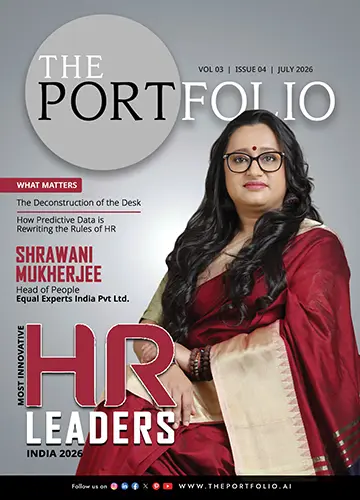
Chandni Chopra-Most Innovative HR Leaders India 2026
A seasoned People Success Leader with 14+ years of experience spanning Citibank to LambdaTest and partnering with leadership from Sydney to India, Chandani Chopra specialises in building dynamic, result-driven cultures. Energetic and strong, she drives impact through coaching, change management, and strategic HR to ensure long-term success for employees and the business.
High-growth companies rarely fail because they run out of ideas. More often, they struggle when people systems built for one stage of growth can no longer support the next. Hiring becomes harder, culture becomes harder to preserve, and leaders find themselves balancing speed with scale. Chandni Chopra, VP of People and Culture at TestMu AI, has spent much of her career navigating that reality, though her perspective on people and leadership was shaped long before she entered HR. Beginning her career in engineering before moving into sales, she learned early how organisations function and how people experience them. Those lessons continue to influence her approach today. At TestMu AI, she has helped build a people function that combines systems thinking, technology, experimentation, and business accountability to support one of the fastest-growing companies in the testing space.
In a conversation with The Portfolio Magazine, she shares her perspectives on growth, culture, technology, and the future of leadership.
I didn’t start in HR. My career began in engineering, then I moved into sales. Before I ever sat on the people side of the table, I’d already experienced what it feels like to be managed well and badly. I’d seen leaders invest deeply in people, and I’d also seen environments where employees were treated as little more than headcount. That lens has never left me.
When I was on the employee side, a great workplace meant a strong brand, a stable salary, and a predictable environment. If people stayed, it was considered a good company. At TestMu AI, that definition has been completely rewritten. The people who thrive here are not looking for comfort. They’re looking for speed, ownership, and the opportunity to build something meaningful.
I’ve seen individuals join for one role and completely redefine their contribution within a year because the environment gave them the freedom to do so. We often describe this as a “startup within a startup” culture, where people are encouraged to think beyond their job descriptions, experiment, and build with a sense of ownership. Today, a great workplace is where you’re trusted early, challenged often, and your work genuinely moves something important.
One of the hardest things I have had to navigate is the balance between loyalty and performance.
In the early years of TestMu AI, people stayed through uncertainty, rapid scaling, and a fair amount of chaos. That kind of commitment builds real emotional equity and you do not ignore it easily.
As the business scaled, expectations changed. Pace increased, complexity increased, and the cost of misalignment became far more visible. Avoiding these decisions does not protect anyone. It shifts the cost to the team and shows up as delayed execution, increased load on high performers, and, eventually, in customer outcomes. When we did make those calls, execution accelerated and performance standards became clearer. Growth rarely comes from avoiding difficult choices. It comes from making them consistently and fairly.
“The companies that grow fastest are not the ones that avoid hard people decisions. They are the ones that make them and let the team grow because of it.”
Hiring fast without the right discipline is the most costly. My philosophy has always been to move quickly because the cost of an empty seat is real, the cost of a stretched team is higher, and the price of lost momentum waiting for the perfect candidate is the highest of all. But hiring fast does not mean hiring loosely. Every time we lowered the bar to close a role faster, we paid more later than we saved upfront. The discipline that makes fast hiring work is being equally fast at recognising misalignment and acting on it. Speed in, speed out, and clarity throughout.
The second challenge is inconsistent manager experience. Same company, same values, same policies, but a completely different employee experience depending on who you report to. Culture cannot survive that variance. Structured check-ins, manager calibration, and standardised onboarding have narrowed that gap, though it remains a work in progress.
I am an engineer by education and remain one. When I look at an HR problem, my instinct is not to create a policy. It is to ask what is broken in the system and how we can build a fix. At TestMu AI, we do not just buy tools. We build them. We think like product managers. Recruiter performance tracking, onboarding workflows, feedback systems, and people analytics were all built in-house with the same engineering rigour applied to our product. Every tool has to earn its place. If it does not remove friction or improve a decision, it gets removed.
Technology becomes valuable when it enhances judgment, not when it replaces it. The shift we are driving is not just about using AI, but about using it well, questioning it, and taking genuine ownership of the output.
Gen Z has forced a reset in how we think about management, and it has been one of the healthiest developments for our leadership culture. They are not chasing titles. They are not impressed by hierarchy. What they care about is learning speed, meaningful work, and whether they are actually evolving as thinkers and builders.
The managers who win are doing something very different. They give context instead of instructions. They create ownership instead of assigning tasks. The shift from control to context is the single biggest management upgrade a company can make right now. A lot of leaders mistake this generation’s drive for entitlement. It is not. Ambition is simply wired differently. Builders do not leave for a 15% hike. They leave when they stop learning. Our job is to make sure that never happens.
“I started as an engineer. When I look at an HR problem, my instinct is not to create a policy. It is to ask what is broken in the system and how we build a fix.”

Thank You For Subscribing
There was an error while trying to send your request. Please try again.